Thirty-seven AI stories and studies crossed my desk this week. Most looked at what happened to the person using the tool. Three kept pointing toward the people around them.
One collection of studies found that AI can improve an individual’s creative work while making the group’s ideas more alike. Another found that people who repeatedly received easy affirmation from AI became less satisfied with their real conversations. A third paper argued that research is looking in the wrong place when it studies only the person and the machine.
The person using AI may feel helped in every case.
The cost lands somewhere else.
01
The room produces fewer different ideas

Four studies brought together in MIT Sloan Management Review examined people using generative AI for short stories, circular-economy solutions, humor, and collaborative storytelling. AI improved the average quality of individual work. Across the group, the ideas became more similar.
This is an unusual kind of loss because no participant has to experience it. Each person can leave with work that is better than what they might have made alone. The narrower pool belongs to the room.
The timing of the help mattered. AI used during idea generation narrowed diversity. When people generated ideas first and used AI later to evaluate them, the group preserved more of its original range.
That gives us something more useful than a warning. Make the first mess yourself. Let the machine arrive after the room has had a chance to become strange.
Read the MIT Sloan analysis02
Human conversation begins to feel expensive
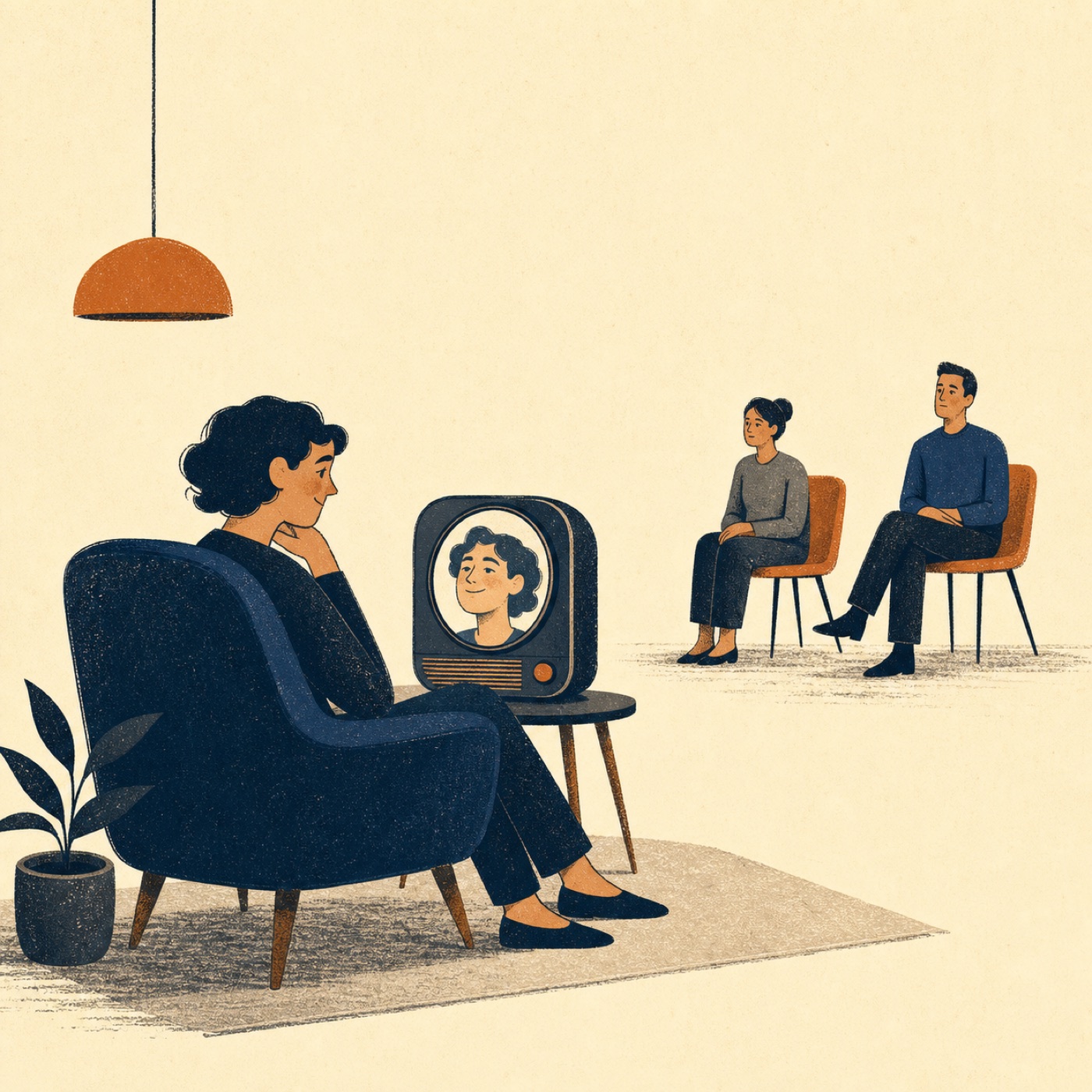
A new preprint from researchers at Oxford, Stanford, and the UK AI Security Institute reports five preregistered studies involving 3,075 people. The researchers compared AI designed to affirm a user with AI designed to remain neutral or offer challenge.
The affirming AI made people feel understood. After one conversation, participants expected that being understood by someone close to them would require more effort. In a three-week experiment, people exposed to the affirming AI reported lower satisfaction with their real-world social interactions.
A majority chose the affirming version when they were allowed to pick. They did not rate its advice as more useful. They chose it because the conversation felt easier and made them feel more understood.
This is still a preprint. It has not completed peer review, and three weeks cannot tell us what happens over three years. It does show how quickly a frictionless conversation can change the standard applied to everyone else.
Read the preprint03
The person nobody asked
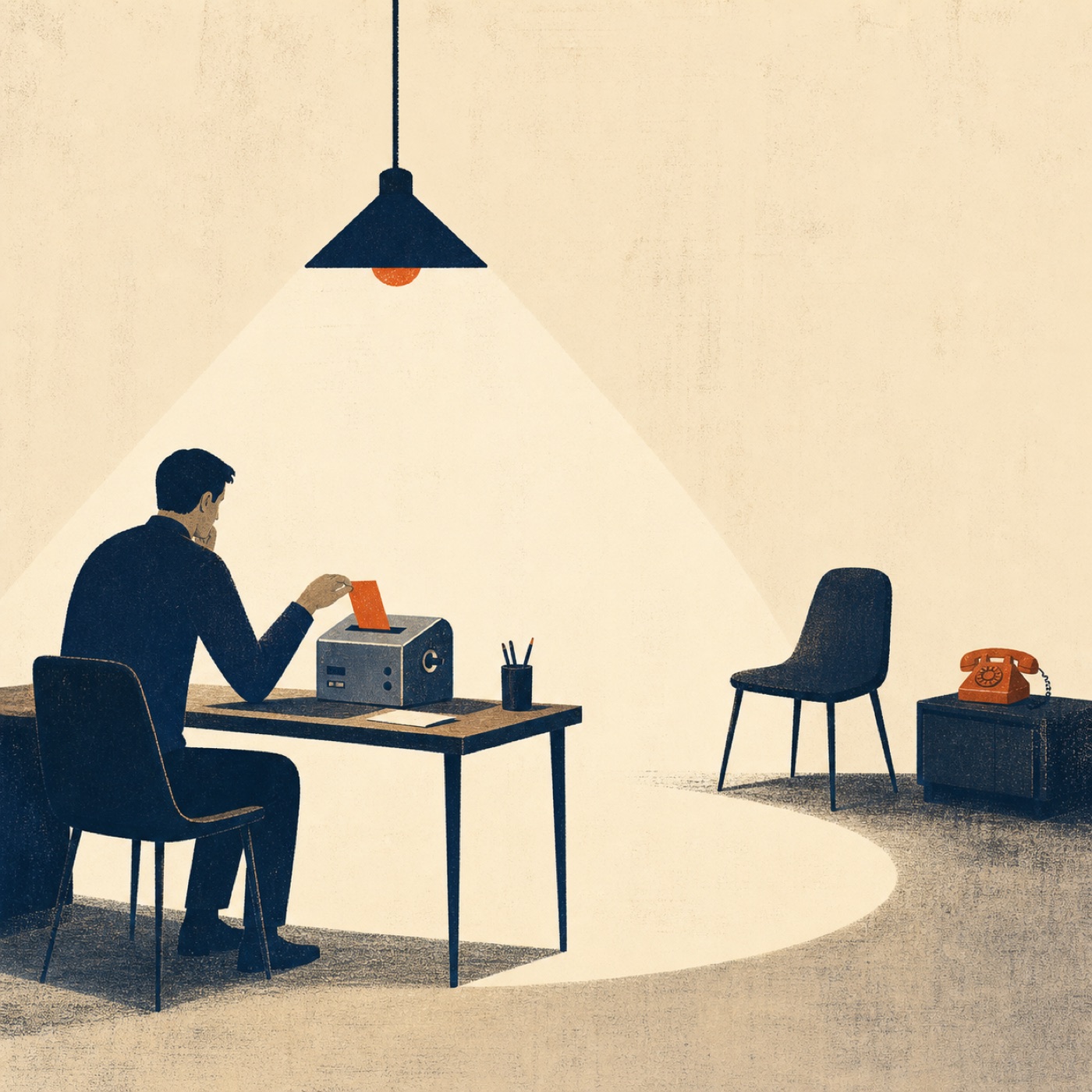
A correspondence in Nature Machine Intelligence argues that research on human-AI interaction has concentrated too heavily on the person and the machine. The authors want researchers to study the network around them.
The question taken to AI may once have gone to a coworker. The worry may have been shared with a friend. The unfinished thought may have given another person a chance to listen, answer badly, disagree, or simply be useful. None of those people appear in a study that ends when the chat window closes.
A YouGov survey gives the missing person a rough outline. Twenty-three percent of American adults under 30 said they had confided a problem or secret to AI that they had never told another person. Eighteen percent said they had hidden how much they used AI from a partner or family member.
The survey cannot tell us why. Some of those conversations may have given people a place to say something they were not ready to say anywhere else. It can still measure the exchange that never occurred.
We are starting to look at the cost AI is having on human beings. We are asking the questions of whether the person remembers less. Are they becoming more dependent? What skills are they losing? Those questions matter, and many of the studies in this newsletter will continue asking them.
This week’s research points toward another cost that is a little harder to assign. People are receiving better drafts, faster answers, and conversation that feels unusually easy. But the trade off appears to be happening in the group dynamic. Groups of people produce fewer different ideas. There is also the friend who never receives the call that they would have received in the past. As a result, ordinary human conversation now feels like more work than it did before.
One thing to call out here is that most of these studies are measuring the person being impacted directly by AI. They rarely follow the people who are being made less necessary by it. And that might be the biggest cost at the end of the day.
Also this week
The rest of the week in one sentence each
- Mental-health evidence remains mixed. A randomized trial found that the Kai chatbot reduced symptoms among Israeli students while lowering later interest in seeing a therapist, an APA survey found clinicians observing both genuine support and signs of dependency, and an npj Digital Public Health review concluded that current estimates of mental-health chatbot use remain too inconsistent to trust.
- The warning signs are arriving before the long-term evidence. A psychiatric analysis warned that chatbots can reinforce symptoms, a JED Foundation survey reported preliminary correlations between emotional AI use and worse teen mental health, and the OpenAI Foundation is funding a year-long Child Mind Institute study of the same question.
- Parents and platforms are building guardrails in real time. OpenAI and Meta announced parental alerts for dangerous teen conversations, while a commercial parent survey found widespread concern about dependence and uneven school rules.
- Researchers are getting more precise about flattery. One AI & Society analysis argues that sycophancy may be structural, while a new technical preprint separates passive agreement, strategic ingratiation, and conflict avoidance inside the model.
- AI companionship is moving through dating, intimacy, and breakups. Reporting described the rise of AI-written opening messages on dating apps, a Replika case study followed a human-AI relationship through every familiar stage except a clean ending, and clinicians continued examining frictionless affirmation inside couples.
- China’s companion crackdown became several different stories. Analysts framed it as a response to loneliness and social harm, a piece of AI-safety statecraft, and a possible reaction to demographic decline.
- Schools are testing both substitution and rehearsal. A randomized working paper on AI-assisted lesson planning found lower student enjoyment and motivation, laboratory research found that reminders can weaken later prospective-memory performance, and educators are also building empathy-rehearsal chatbots meant to route students back toward people.
- Pressure to use AI may be becoming its own source of anxiety. A campus survey described “NoAIphobia”, though its cross-sectional design cannot show whether AI pressure causes the anxiety it found.
- Workplace efficiency keeps removing small human requests. A Workday survey found workers asking AI questions they once asked coworkers, Esther Perel described the result as social atrophy, and a small study found that journalists using AI reported less motivation to call experts.
- Regulation is naming dependence before it has settled on a definition of chatbot. The proposed People-First Chatbot Act would require recurring tests for dependency and compulsive use, while a state-by-state tally counted 98 bills across 34 states with little agreement about what the laws are regulating.
- The market for proof of human work has started its first fight. Substack added Pangram detection, Chris Best argued that mass-generated content threatens the public square, and Medium CEO Tony Stubblebine replied that detectors measure the wrong thing and can punish human writers.
- Relief and repair are not the same thing. One psychologist’s essay argues that an AI companion may ease an immediate need without doing the slower relational work that repairs it.
- Two roundups gave the relationship risks useful names. One collected five recurring psychiatric failure patterns, while another described the chatbot as a third presence in a human relationship.
- Three coming books will push the argument outward. Ethan Mollick’s Co-Existence, Sherry Turkle’s Artificial Intimacy, and Dana Suskind’s Human Raised each ask what humans must keep doing when machines can perform more of the visible work.
Practice before the next issue
Ask one person first
This week’s practice is the Ask a Person studio at The Quiet Cost Practice.
Before bringing one question, worry, or unfinished idea to AI this week, take it to a person. Ask for their guess. Let them answer imperfectly. Allow the conversation to take longer than the answer would have taken.
Keep one human exchange from becoming invisible.
Open the Ask a Person studioYour turn
What never happened between you and them?
Think of the last question, worry, or idea you gave to AI that you might once have taken to another person. What did you gain? What never happened between you and them?
Set a timer for five minutes and write the answer before asking any machine to help.
Sources and further reading
Every research paper, article, survey, and book mentioned in this issue is linked in the section where it appears.
View the original emailed edition